Archive

Tag Archives: Global Health

Nolzim Uddin is a man with a dream. Equipped with a radiant white smile and kind eyes, his handsome features are befitting of his job as an actor for Bengali television dramas. But the struggles of a rising actor are not unique to the streets of Hollywood or New York City. If anything, the effects of unsteady offers and competition in the industry are only exacerbated in a country with already limited opportunity. In order to make sure the needs of his wife and one-year-old son are met, Uddin must supplement his income by working at a local restaurant six days a week, only taking small breaks in his schedule when a part comes through.

Although his priorities are first and foremost to ensure the security of his family, Uddin hopes to one day assist his countrymen in their own endeavors of attaining happy and stable lives. His plan of action is to eventually build a hospital in his hometown of Khulna; a hospital where “all people—poor man and rich man—can come when they are sick.”

According to Uddin, healthcare in Bangladesh is currently corrupted by profit-driven motives, both on part of the hospitals and, more importantly, the doctors themselves. Government support to provide access to healthcare has been severely minimal in an already resource-poor country. This has not only perpetuated a cycle of poverty and sickness that threatens the state of the nation, but has also created a market for the privatization of medical centers and services. As a result, the number of hospitals and health care workers in Bangladesh has increased over the last ten years, most notably in the capital, Dhaka. However, with the introduction of private state-of-the-art hospitals, such as Apollo Hospital Dhaka, comes a significant price to pay, as funders tend to have their own agendas at work.

Dr. Dewan Alam of the Chronic Disease Unit at ICDDR, B has noted the progression of public-private partnerships and is disheartened by the outcome. “Health has become a commercial commodity,” he stated, “even a mother and her newborn infant are billed separately on hospital invoices now.” The combination of exceedingly overcrowded public hospitals where it is impossible to get treatment, and private for-profit facilities run by capitalistic mechanics, has made it so that basic health interventions and procedures are not widely available to the people, just under half of which are living below the poverty line.

Rising prices of maternal healthcare services attests to this fact. According to a 2010 report by the Ministry of Family Health and Welfare, expenditures for normal delivery methods in a private facility range up to 3,750 Taka, over triple the amount one incurs at federal hospitals. Moreover, if complications should arise, prompting the need for a C-section delivery, costs can range up to nearly 14,000 TK, which equates to 1-8 times the monthly salary for nearly half the population. These strains are devastating to communities that already struggle for basic necessities.

At the very least, one would hope that the physicians themselves would be moved to revolutionize the system, after witnessing their country’s destitution on the most intimate of levels, but this does not seem to be the dominant case. In fact, as far as Uddin is concerned, “90% of the doctors in Bangladesh are business men…they do not listen, they do not nurse the poor; they just secure money for themselves.” The numbers of patients seen in a day at private clinics far outnumber those that are manageable to provide quality treatment. According to his testimonies, Uddin and his family have never received a health consultation that has lasted longer than 15 minutes, no matter the case. “They just take the maximum number of patients for maximum income.”

It is understandable that in one the most densely populated countries in the world, physicians will be hard-pressed for time during patient consolations, especially if motivated to help as many individuals as possible. However, what is lost in minutes must be made up in attention to detail and effective treatment prognosis, both of which seem to be lacking in Bangladesh.

Due to the conditions previously outlined, many times it is not even possible for people to visit a qualified physician, especially in the rural areas. As a result, nearly 50% of the people in Bangladesh are first diagnosed and treated by Unqualified Allopathic Professionals (UAPs), namely “village doctors”. Although they lack formal medical qualifications, these village doctors still prescribe and practice medical treatment, most of the time with detrimental results. Previously observed issues have included misdiagnosis and harmful or unnecessary prescription guidance, which can easily endanger the lives of patients. But despite these trials, institutions such as ICDDR, B recognize the key role these individuals play in the country’s healthcare system, and have created initiatives to train the village doctors in proper medical treatment, rather than eradicate their practice.

Still, this has proved to be quite a challenge, as unnecessary prescription writing continues to be a reoccurring problem. Village doctors have high incentives to recommend various drug treatments, whether they are needed or not, as pharmaceutical industries offer them a percentage of the money paid towards medication; their income is being directly bolstered by such authorizations.

Furthermore, the same conditions are offered to qualified MBBS and MD practitioners, who also get a percentage of the payments made towards biomedical tests and drug costs. This has led locals, such as Uddin, to grow skeptical towards the healthcare industry, questioning whose interests they truly have at heart.

But of course, not everyone has remained passive to these circumstances. Dr. Sufian Sheikh MBBS has been equally outraged by these systems that continually ostracize those most in need of care. Deeply moved to make change in anyway possible, he has set up a private clinic in Khulna, his own place of birth. In his clinic, Dr. Sheikh charges bare minimums for his services—just enough to keep it running—so as to not deter anyone from seeking the medical treatment they need.

Like Uddin, Dr. Sheikh views the disorderly healthcare structure as fault of the physicians who fail to put people before profit; however, he puts blame on the government, and their failure to address poverty in Bangladesh, for the results of a profit-driven system. “People have five needs: food, clothes, education, health, and shelter—all of which the government is not working to provide,” he states. With these five elements in place, Dr. Sheikh believes the people will not only be able to build up their own success, but in their stability they will also be willing to extend help to others that are struggling to survive.

Research done by Bangladesh Development Research Center would seem to support Dr. Sheikh’s theories. The study refers to Abraham Maslow, an American Psychologist, and his proposed ‘Hierarchy of Needs’ (depicted below), which was used to assess motivational factors in Bangladesh. Outcomes showed that a majority of the respondents, regardless of class, stated that “physiological needs are the prime needs of most Bangladeshis…they will be happy if they are able to get the basic needs.”

Although there was slight mention of needs for safety and security, others beyond these first two tiers of the pyramid were virtually non-existent. Furthermore, respondents went so far as to discount emotional needs, such as love and a sense of belonging, as “worthless”, when most are just simply trying to make ends meet. This may serve as an explanation as to why there is not more active collaboration among communities intra-nationally within Bangladesh.

Yet what is lacking in resources is made up in the sheer number of people living in the country; if the government can start mobilizing communities out of destitution through welfare programs, perhaps it will be possible for a pattern to bloom outwards, as groups work together to reclaim their rights, such as access to healthcare.

Physician-anthropologist Paul Farmer warns that recurrent concepts in public health, such as “cost-effectiveness” and “sustainability”—also relevant to the discussed public-private health ventures—are dangerous because “they are likely to be perverted unless social justice remains central to public health and medicine.” In the case of Bangladesh, concerns of financial stability have overshadowed the primary role of hospitals and healthcare professionals: to serve and treat the afflicted, regardless of socio-economic status.

As it stands now, the healthcare sector leaves much to be desired, and whether or not reforms are made in the near future will have a major impact on status of the nation. However, there remain pockets of hope that carry the promise of one day promoting changes to revolutionize the delivery of medical services. Until that time, it will be up to these few to continue in their efforts of promoting equality—no man left behind.
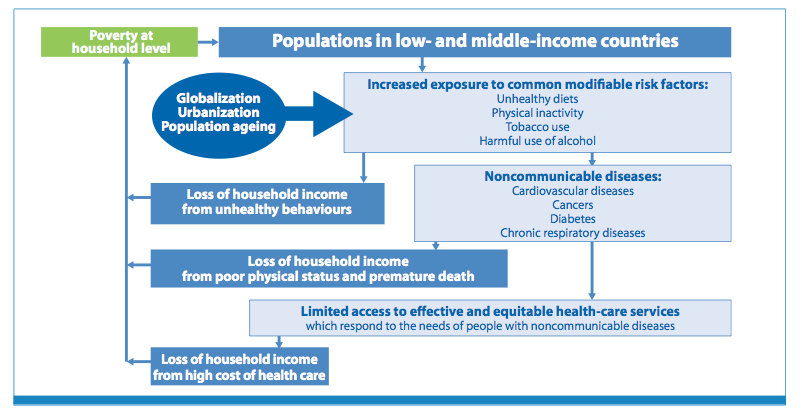
Early this week, I was given my official assignment to complete over the course of my next three months here in Bangladesh:

I will be collaborating with the Public Health Science Department here at ICDDR, B in order to design community health modules for chronic disease patients, which are to be implemented at the Centre for Control of Chronic Disease in Bangladesh (CCCDB). The modules are essentially workshops that will help educate patients on the features, risks and management of chronic diseases, namely: Diabetes, Hypertension (High Blood Pressure) and Cardiovascular Diseases.

I am really excited about it, and more than ready to take on the challenge!

_________________________________________________________________________________________

Below I have posted a brief introduction and proposal I have written up for the project:

According to reports published by the World Health Organization, chronic diseases, or non-communicable diseases, make up the world’s number-one killer, accounting for 60% of all deaths globally—80% of which occur in low and middle-income countries (1). Chronic non-communicable diseases are most often characterized as having “multiple risk factors, a long latency period, a prolonged course of illness, functional impairment or disability, and in most cases, the unlikelihood of cure,” which makes for complex medical cases (2). As such, these types of illness require a different approach to treatment—one that integrates economic, social and political sectors in order to build a framework of support through the illness. There is no procedure to do the trick; a change in lifestyle is required to maintain health.

In Bangladesh, a low-income country residing in the Indian Subcontinent, rising trends in the number of chronic disease diagnoses have been observed, particularly in rural parts of the country where there is limited access to proper healthcare facilities and treatment. Among these emerging disease, the most prevalent are diabetes, hypertension and cardiovascular disease (3). In response to this epidemic, several organizations, such as CCCDRB, BRAC and the Hope Foundation have erected health clinics with the help of trained volunteer staff, where individuals can receive basic health services, as well as diagnostic tests such as blood sugar and blood pressure testing.

While a significant amount of patient data has been accrued, and the numbers of uncovered chronic disease diagnoses continue to increase, research indicates that there is a gap in the translation of data and research into practices that are being implemented into the community. In order to effectively tackle the threats to health posed by non-communicable disease, it is essential that sustainable health programs are put into effect in order to educate the people on general health and maintenance of chronic disease.

It has been noted by Glasgow and Emmons that health education and health programs must reach some threshold of intensity in order to achieve success; however, programs of too rigorous a design are likely to be unsustainable, as “few practice settings will have the resources of staff expertise required, and a relatively small and unrepresentative proportion of patients are likely to volunteer” (4). Instead, “minimal intensity” programs that are frequent and low cost may provide a better solution, especially taking into consideration low-income populations with limited educational opportunity and a lack of access to healthcare in general. The proposed modules are an attempt at designing a low cost, minimal-threshold health regimen that can be used by volunteer health workers in Bangladesh. The program will be designed to promote group activity and learning in order to better understand the nature of chronic illness, and work as a team to formulate a plan for behavioral changes based on the “5A” model (4):

  1. Asses: Determine beliefs, behavior and knowledge
  2. Advise: Provide specific information about health risk and benefits of change
  3. Agree: Collaboratively set goals on the basis of patients’ interests and confidence in their ability to change behavior
  4. Assist: Indentify personal barriers, strategies, problem-solving techniques and social/environmental support
  5. Arrange: Specify a plan for follow-up (phone calls, visits, (e)mail, etc.)

These volunteer-run health centers have great potential to become a source of health education for the community, promoting healthful self-regulating behaviors for individuals suffering from chronic diseases.

_________________________________________________________________________________________

WORKS CITED

(1) – World Health Organization. 2008-2013 Action Plan for the Global Strategy for the Prevention and Control of Noncommunicable Diseases (2008).

(2) – National Public Health Partnership. Preventing Chronic Diseases: A Strategic Framework. Rep. 2001.

(3) – International Center for Diarrhoeal Disease Research, Bangladesh. “Diabetes: The Emerging Epidemic in Bangladesh.” ICDDR,B Annual Report (2008): 7-10.

(4) – Glasgow, Russell E., and Karen M. Emmons. “How Can We Increase Translation of Research into Practice? Types of Evidence Needed.” Annual Review of Public Health 28.1 (2007): 413-33.

___________________________________________________________________________________________

Bangladesh is a country famous for its rich cuisine, its garment industry—one of the major clothing suppliers in the world—and its origin as the ‘birthplace’ of Cholera research.

Cholera is an infectious disease caused by the bacterium V. Cholerae, which causes symptoms of severe diarrhea and vomiting that often lead to deadly levels of dehydration if not properly treated. While the disease has long plagued the sub-tropical regions of Southeast Asia, it was just over fifty years ago that a substantial initiative took place in order to study its nature. It was then that the Southeast Asian Treaty Organization (SEATO) had come into existence, entering into an anti-communist pact between a number of western world powers—Australia, New Zealand, France, the United Kingdom, and the United States—and several developing countries in Southeast Asia—namely Thailand, the Philippines, and Bangladesh, which was then known as East Pakistan.

During that time, the United States was also in the midst of war with Vietnam; many U.S. soldiers occupying the surrounding region, thanks to authorizations consented under SEATO.  In order to ensure their army’s protection, the U.S. agreed to supply the financial backing needed to set up a research facility and study the disease that was running rampant in those parts. East Pakistan was believed to be an epicenter of Cholera, and so it was chosen as the site for the hospital-lab, spurring the creation of Pakistan SEATO Cholera Research Laboratory, which would later come to be known as the International Center for Diarrhoeal Disease, Bangladesh (ICDDR, B).

Since then, ICDDR, B, has consistently remained focused on treating victims of Cholera, however, despite the efforts of its dedicated medical staff, infections continue to recur at steady rates, year after year. Cholera is a water-born disease, making Bangladesh a prime habitat for it to fester. Not only is the country abundant in lakes and rivers, but there is also a plentiful rainy season, which causes various parts of the country to undergo annual flooding.

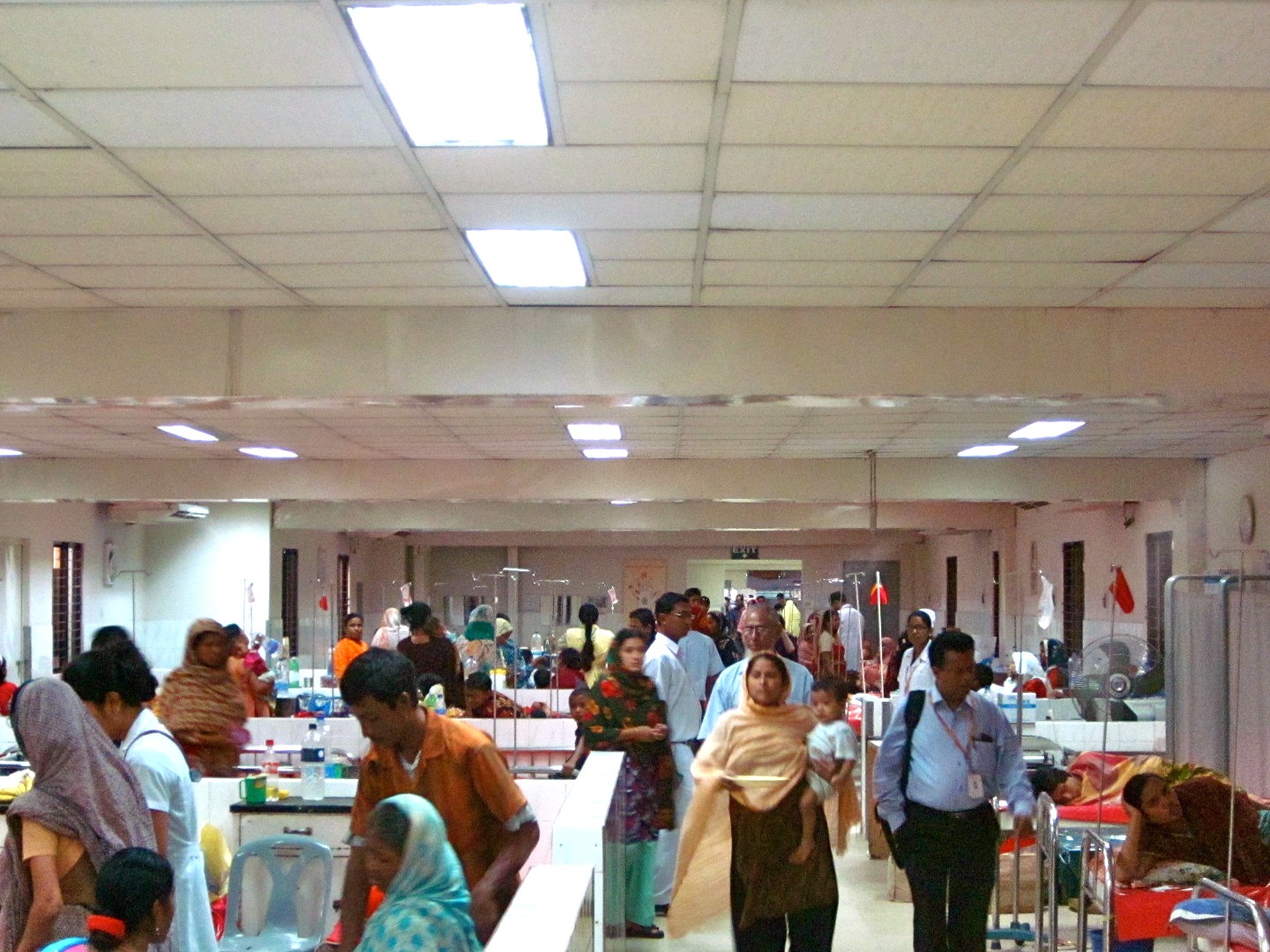
Chief Physician of the ICDDR, B Dhaka Hospital, Dr. Pradip K. Bardhan MD, sees a countless number of patients every year in the hospital’s busiest ward, the Short Stay Unit. “What’s interesting is that despite being a water-born disease, we don’t see a spike in the number of Cholera patients until the dry season, when the water levels are actually the lowest,” remarked Dr. Bardhan. “Any idea why this might be the case?”

He continued on to explain that humans are not natural hosts for the Cholera germ, which prefer to remain submerged in an aquatic environment. As such, Cholera tends to germinate within plankton, microscopic organisms residing in water. These plankton ‘bloom’ during the dry seasons, multiplying at an exponential rate, and consequently, rapidly increase the number of Cholera germs in the environment. However, this alone is not a sufficient explanation to account for the vast numbers of people that are affected by Cholera every year. In order to be infected with the disease, an adult must ingest over a million germs into their body. “The only way for a person to intake such a large quantity is by consuming either vomit or feces, the two mediums by which the Cholera germs are passed through the body in such high numbers,” Dr, Bradhan declared, “so if you meet a man who has Cholera, you know that he has literally eaten crap!”

While many in the developed world might be disgusted by such a brash suggestion, in Bangladesh, this is not the case—in fact, these conditions occur all too easily. During the dry season, clean drinking water, already in scarcity, is at a bare minimum. This forces many of the locals to take water from contaminated sources they normally would not have been willing to use. With 40% of the country living below the poverty line, few are left with any choice. A serious expression came over Dr. Bradhan’s face as he further commented on the subject, “People are so poor and so desperate for water that they take the risk—some even do so despite knowing the consequences.”

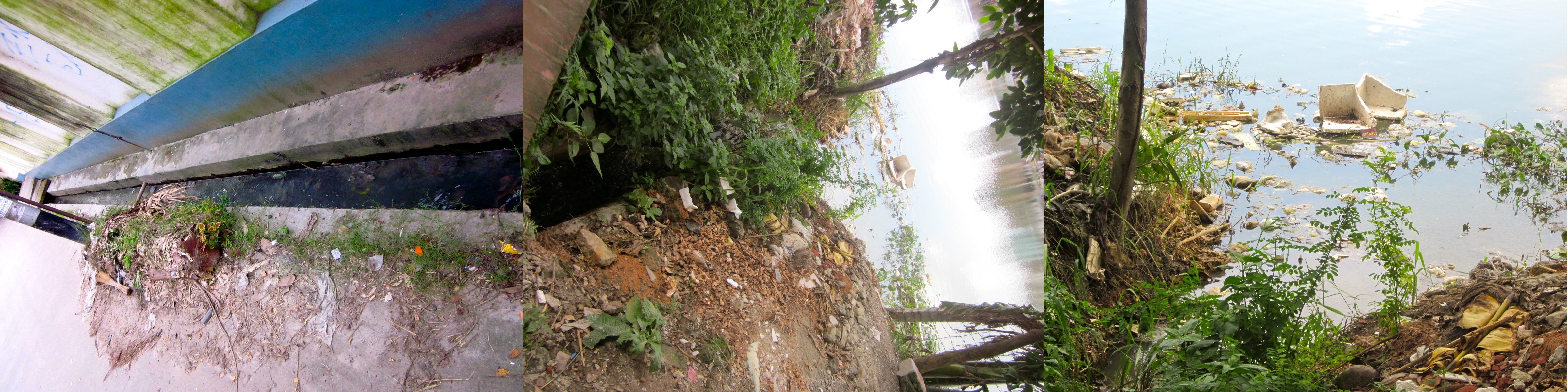
Poor water sanitation and a lack of infrastructure in Dhaka have caused vast amounts of sewage to overrun into the surrounding streams, lakes and rivers. While walking along the water’s edge, one can observe the large trash deposits that pollute the waters and smell the ripe stench of feces that contaminates the air. Even at a glance, it is quite obvious that one of the major inhibitors to the progression of healthcare in Bangladesh is rooted in water quality and sanitation.

In the latest World Water Development Report, the United Nations stated that access to water is not only essential for life and longevity, but also for sustainable development as a whole. Figures estimate that for every $1 invested towards safe drinking water around the globe, there will be a return of $3-$34 dollars, depending on the region and type of investment that is made.  Furthermore, “almost one-tenth of the global disease burden could be prevented by improving water supply, sanitation, hygiene and management of water resources,” which could greatly reduce the numbers of the 1.4 million children dying annually due to preventable diarrhoeal diseases, such as Cholera.

Dr. Bradhan claims that two-thirds of the patients seen in the SSU are child-patients, attesting to the number of children that are being affected by such water-related diseases. This figure translates to a significant amount of cases considering that the number of patients seen at The Centre has risen drastically from the 66 patients a year seen in 1960, to the average of 300 patients treated daily at present. Additionally, with the population of Bangladesh steadily increasing, there are no signs that the high patient count will depreciate.

Taking this into account, the hospital has implemented several strategies in order to more effectively treat the community.All the beds used are simply crafted, yet durable and space-efficient, making them ideally catered for large numbers of people packed into a limited area. Cleaning is also a breeze. Each day of the week has a corresponding bed mat color, which quickly notifies medical personnel if a bed has been freshly made or if it might still be sullied from a previous day or previous patient. Dr. Bradhan comments on the utility of the ‘cholera cots’ in the video clip below:


In the emergency center of the SSU, each bed is readily equipped with four IV bags—two on either side of the bedposts—in an attempt to save as many precious seconds as it is possible when treating the victims of sickness. “We’ve had cases where it has been necessary to insert all four IV’s at once into the patient—one in each limb,” said Dr. Bradhan while recounting instances when patients have been on the verge of death from severe dehydration. “We have to start pumping fluids as quickly as possible; it’s not the Cholera that kills them, it’s the dehydration.” Of course, not all cases are so extreme. For very mild forms of sickness the hospital also offers an area in which individuals can sit while they sip on Oral Rehydration Solutions (ORS) made from rice sugars and water, which have been proven to have greater electrolyte restoration standards compared to traditional glucose solutions. As of now, ORS provide the most effective and least expensive means of treatment, making it a widely accessible and sustainable one.

It is this type of consideration towards the needs of the community, coupled with strong preemptive measures, that has led to the hospital’s wide success in caring for the people of Dhaka, and surrounding areas of Bangladesh. It is also worth noting that the entire hospital runs on a paperless system. Physicians, nurses and staff can be seen making their rounds holding small electronic devices through which they are able to take write up patient charts and take notes. While such technological advancements are not common in other hospitals throughout Bangladesh, it is still an enlightening example of the progression that has been made, and the potential for expansions to come in the future.