___________________________________________________________________________________________
Bangladesh is a country famous for its rich cuisine, its garment industry—one of the major clothing suppliers in the world—and its origin as the ‘birthplace’ of Cholera research.
Cholera is an infectious disease caused by the bacterium V. Cholerae, which causes symptoms of severe diarrhea and vomiting that often lead to deadly levels of dehydration if not properly treated. While the disease has long plagued the sub-tropical regions of Southeast Asia, it was just over fifty years ago that a substantial initiative took place in order to study its nature. It was then that the Southeast Asian Treaty Organization (SEATO) had come into existence, entering into an anti-communist pact between a number of western world powers—Australia, New Zealand, France, the United Kingdom, and the United States—and several developing countries in Southeast Asia—namely Thailand, the Philippines, and Bangladesh, which was then known as East Pakistan.
During that time, the United States was also in the midst of war with Vietnam; many U.S. soldiers occupying the surrounding region, thanks to authorizations consented under SEATO. In order to ensure their army’s protection, the U.S. agreed to supply the financial backing needed to set up a research facility and study the disease that was running rampant in those parts. East Pakistan was believed to be an epicenter of Cholera, and so it was chosen as the site for the hospital-lab, spurring the creation of Pakistan SEATO Cholera Research Laboratory, which would later come to be known as the International Center for Diarrhoeal Disease, Bangladesh (ICDDR, B).
Since then, ICDDR, B, has consistently remained focused on treating victims of Cholera, however, despite the efforts of its dedicated medical staff, infections continue to recur at steady rates, year after year. Cholera is a water-born disease, making Bangladesh a prime habitat for it to fester. Not only is the country abundant in lakes and rivers, but there is also a plentiful rainy season, which causes various parts of the country to undergo annual flooding.
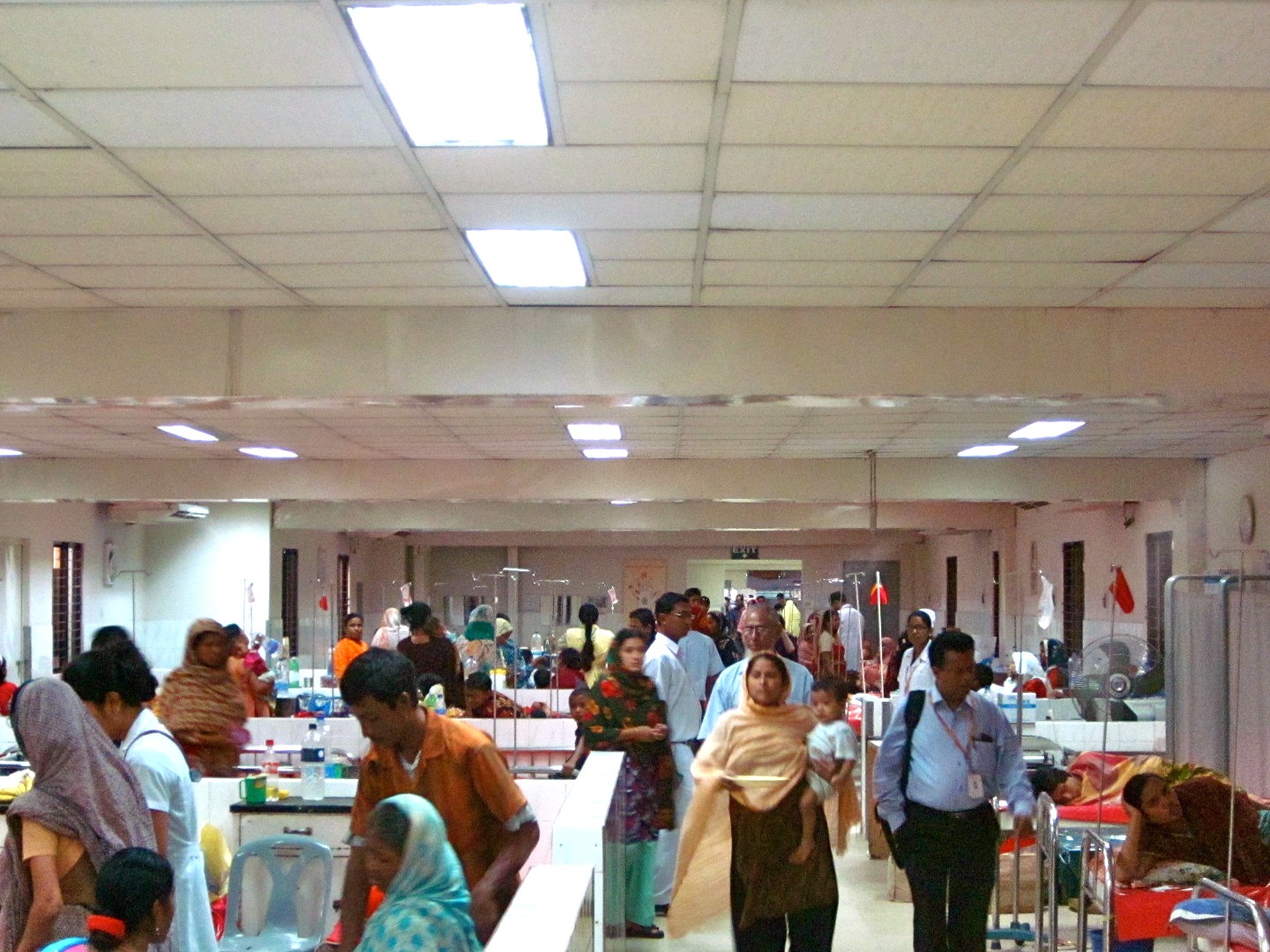
Chief Physician of the ICDDR, B Dhaka Hospital, Dr. Pradip K. Bardhan MD, sees a countless number of patients every year in the hospital’s busiest ward, the Short Stay Unit. “What’s interesting is that despite being a water-born disease, we don’t see a spike in the number of Cholera patients until the dry season, when the water levels are actually the lowest,” remarked Dr. Bardhan. “Any idea why this might be the case?”
He continued on to explain that humans are not natural hosts for the Cholera germ, which prefer to remain submerged in an aquatic environment. As such, Cholera tends to germinate within plankton, microscopic organisms residing in water. These plankton ‘bloom’ during the dry seasons, multiplying at an exponential rate, and consequently, rapidly increase the number of Cholera germs in the environment. However, this alone is not a sufficient explanation to account for the vast numbers of people that are affected by Cholera every year. In order to be infected with the disease, an adult must ingest over a million germs into their body. “The only way for a person to intake such a large quantity is by consuming either vomit or feces, the two mediums by which the Cholera germs are passed through the body in such high numbers,” Dr, Bradhan declared, “so if you meet a man who has Cholera, you know that he has literally eaten crap!”
While many in the developed world might be disgusted by such a brash suggestion, in Bangladesh, this is not the case—in fact, these conditions occur all too easily. During the dry season, clean drinking water, already in scarcity, is at a bare minimum. This forces many of the locals to take water from contaminated sources they normally would not have been willing to use. With 40% of the country living below the poverty line, few are left with any choice. A serious expression came over Dr. Bradhan’s face as he further commented on the subject, “People are so poor and so desperate for water that they take the risk—some even do so despite knowing the consequences.”
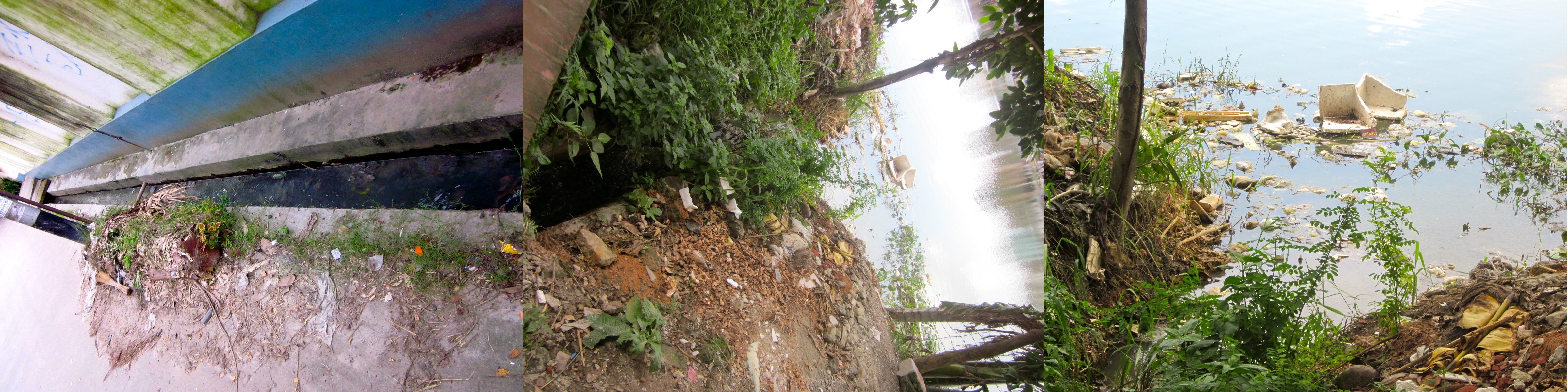
Poor water sanitation and a lack of infrastructure in Dhaka have caused vast amounts of sewage to overrun into the surrounding streams, lakes and rivers. While walking along the water’s edge, one can observe the large trash deposits that pollute the waters and smell the ripe stench of feces that contaminates the air. Even at a glance, it is quite obvious that one of the major inhibitors to the progression of healthcare in Bangladesh is rooted in water quality and sanitation.
In the latest World Water Development Report, the United Nations stated that access to water is not only essential for life and longevity, but also for sustainable development as a whole. Figures estimate that for every $1 invested towards safe drinking water around the globe, there will be a return of $3-$34 dollars, depending on the region and type of investment that is made. Furthermore, “almost one-tenth of the global disease burden could be prevented by improving water supply, sanitation, hygiene and management of water resources,” which could greatly reduce the numbers of the 1.4 million children dying annually due to preventable diarrhoeal diseases, such as Cholera.
Dr. Bradhan claims that two-thirds of the patients seen in the SSU are child-patients, attesting to the number of children that are being affected by such water-related diseases.  This figure translates to a significant amount of cases considering that the number of patients seen at The Centre has risen drastically from the 66 patients a year seen in 1960, to the average of 300 patients treated daily at present. Additionally, with the population of Bangladesh steadily increasing, there are no signs that the high patient count will depreciate.
Taking this into account, the hospital has implemented several strategies in order to more effectively treat the community.All the beds used are simply crafted, yet durable and space-efficient, making them ideally catered for large numbers of people packed into a limited area. Cleaning is also a breeze. Each day of the week has a corresponding bed mat color, which quickly notifies medical personnel if a bed has been freshly made or if it might still be sullied from a previous day or previous patient. Dr. Bradhan comments on the utility of the ‘cholera cots’ in the video clip below:
In the emergency center of the SSU, each bed is readily equipped with four IV bags—two on either side of the bedposts—in an attempt to save as many precious seconds as it is possible when treating the victims of sickness. “We’ve had cases where it has been necessary to insert all four IV’s at once into the patient—one in each limb,” said Dr. Bradhan while recounting instances when patients have been on the verge of death from severe dehydration. “We have to start pumping fluids as quickly as possible; it’s not the Cholera that kills them, it’s the dehydration.” Of course, not all cases are so extreme. For very mild forms of sickness the hospital also offers an area in which individuals can sit while they sip on Oral Rehydration Solutions (ORS) made from rice sugars and water, which have been proven to have greater electrolyte restoration standards compared to traditional glucose solutions. As of now, ORS provide the most effective and least expensive means of treatment, making it a widely accessible and sustainable one.
It is this type of consideration towards the needs of the community, coupled with strong preemptive measures, that has led to the hospital’s wide success in caring for the people of Dhaka, and surrounding areas of Bangladesh. It is also worth noting that the entire hospital runs on a paperless system. Physicians, nurses and staff can be seen making their rounds holding small electronic devices through which they are able to take write up patient charts and take notes. While such technological advancements are not common in other hospitals throughout Bangladesh, it is still an enlightening example of the progression that has been made, and the potential for expansions to come in the future.
 Health 2 Heart