Archive

Global Health

  “The Bangladesh you see now is no where near the same as it was ten years ago,” declared Dr. Masuma Khanam MBBS, a research investigator at the Center for Control of Chronic Diseases in Bangladesh (CCCDB). “The environment has changed drastically, and it is reflected in the people’s health.”

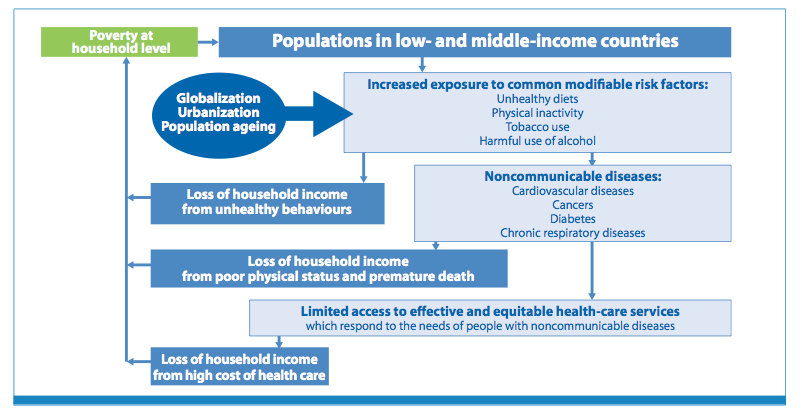
Previously—in similar accordance with other third-world, developing nations—the people of Bangladesh primarily suffered from a long-waged battle against infectious diseases, such as Cholera, Tuberculosis and Malaria. However, a combination of health strategies, globalization and modernization, has coupled with shifts in lifestyle to unveil new health concerns among the population. While successful health interventions have led to receding cases of infectious disease in Bangladesh, increasing trends of chronic non-communicable illnesses have been consistently observed. As of 2002, chronic diseases have accounted for nearly 50% of deaths in Bangladesh, a figure that is steadily escalating, and has generated a great deal of concern among Dr. Khanam and her colleagues at CCCDB for the growing population’s health. “If the situation persists as is, in the next five years, it will be really alarming for our country,” she ensures.

It was in response to this rising epidemic that CCCDB was first instituted in 2009 by several partner organizations, including: BRAC, International Centre for Diarrhoeal Disease Research, Bangladesh (ICDDR, B), Institute of Developmental Studies (IDS), and Johns Hopkins Bloomberg School of Public Health (JHSPH). Dr. Khanam has worked at the center alongside fellow physicians and researchers since its founding, conducting a series of studies focusing on hypertension and diabetes, two of the most prevalent chronic diseases currently plaguing the population of Bangladesh. Based on her findings, Dr. Khanam believes that the key to combating chronic non-communicable disease lies in using preventative measures. She points out that unlike infectious diseases, for which a majority of the time there exists a definite form of treatment or procedural remedy, chronic afflictions do not have a “cure” per se; rather, they rely on regulated therapies and/or lifestyle changes, which are costly and burdensome if left unattended. In the audio below, Dr. Khanam further discusses her thoughts on this issue:


By utilizing diagnostic techniques to identify patients or those who are high-risk, and following up with “lifestyle interventions”, such as awareness campaigns, information sessions and community learning programs, Dr. Khanam believes that we will be able to prevent such diseases from ever coming into full form—or at the very least, delay their progression.

However, before this is possible, she emphasizes that immediate action must take place in order to raise awareness, among lay peoples and healthcare professionals alike, of the threat of chronic diseases. By taking into account certain “risk factors”, researchers, health professionals and individuals themselves will be able assess where on the spectrum of susceptibility they lie, and what preemptive measures should be taken in response. Such risks include uncontrollable factors—age, environment and genetics—as well as modifiable factors—nutrition, physical fitness and tobacco use. While there is little that can be done to change the effects produced by the first category of risks, those of the latter group are very much within the realm of control for professionals and individuals. In fact, the World Health Organization (WHO) has named these last three categories—nutrition, physical fitness and tobacco use—as the primary points of intercepting chronic non-communicable diseases, leading Dr. Khanam to believe that these are where we should be focusing our efforts in Bangladesh, not only to prevent diabetes and hypertension, but all chronic illnesses: cardiovascular disease, cancer, chronic respiratory diseases, and others.

But as previously mentioned, raising awareness and providing knowledge constitute only a piece of the puzzle. Building up the necessary health infrastructures in Bangladesh will be no easy feat, and it will take several paradigm shifts in order to properly address these looming health threats. Most importantly, there must be a transition in the national mindset from one that is almost solely geared towards eradicating infectious disease, to one that is prepared to successfully handle chronic diseases. Furthermore, it will be necessary to create a systemized manner in order register current and potential patients, so that long-term assessments can be made. What Dr. Khanam is calling for is nothing short of a health revolution in Bangladesh.

Posted below are a series of interview questions and answers with Dr. Khanam as she further outlines a battle plan to tackle chronic disease in Bangladesh. First, she expands on the current status of chronic diseases in the country, discussing why it is imperative that these issues be addressed with the utmost haste. She then focuses on the primary barriers currently in place, which are inhibiting the realization of a healthcare structure that she would define as sufficiently equipped for the next generation of health concerns. Lastly, Dr. Khanam shares her thoughts on potential intervention strategies, speaking directly towards the Chronic Disease Community Health Modules currently being developed by the Public Health Sciences Division at ICDDR, B to be implemented in health clinics around Bangladesh.


Based on your observations and research, what is the current situation in Bangladesh regarding chronic diseases; why is it important that we address these issues?

Chronic Disease in Bangladesh Today Why It’s Important to Address Such Issues
-Demographic Transition has led to increased birthrates and lifestyle changes due to industrialization and modernization in Bangladesh.-Epidemiological Transition has led to successful maintenance of infectious diseases and decreased rates of child mortality Bangladesh.

-With a growing population and increased life expectancy, a higher percentage of the nation are now being affected by—or at risk for developing—Chronic Diseases, which have increased prevalence with age.

-Healthcare Providers in Bangladesh have for a long time now been focused on infectious disease. Hospitals, researchers and physicians are ill-prepared—lacking supplies and infrastructure—for the imminent “wave” of chronic disease patients.

-While infectious disease may be remedied by a procedure or course of treatment, chronic diseases have no cure; they must be maintained and controlled, which is much more burdensome and expensive.


What do you feel are some the greatest challenges to chronic disease treatment, and in general, creating sustainable healthcare systems, in Bangladesh?

Primary Challenges to Addressing Chronic Disease in Bangladesh

Health Consumers

Health Providers

-Raising awareness on basic models for “healthy lifestyles”— especially in rural areas with little access to information of health campaigns-Changing deeply rooted cultural and behavioral practices that have adverse effects on health (dietary habits, etc.) -Refocusing the attention of healthcare professionals on chronic disease topics, so that they are able to follow guidelines, promoting accurate and relevant information to their patients.-Creating (centralized) registries and follow-up systems that ensure long-term care and evaluation of chronic disease patients.


What can we be doing in order to meet these challenges to healthcare and reduce the burden of chronic diseases in Bangladesh?

Next Steps

Short-Term

Long-Term

-Creating community health modules that are culturally relevant and tap into local resources and health structures (e.g. community health clinics in Chakaria, Bangladesh). -Look towards health models that have been successfully implemented in the developed world to lower chronic disease rates, and “twisting” them in a way that can flourish in the cultural context of Bangladesh.

Early this week, I was given my official assignment to complete over the course of my next three months here in Bangladesh:

I will be collaborating with the Public Health Science Department here at ICDDR, B in order to design community health modules for chronic disease patients, which are to be implemented at the Centre for Control of Chronic Disease in Bangladesh (CCCDB). The modules are essentially workshops that will help educate patients on the features, risks and management of chronic diseases, namely: Diabetes, Hypertension (High Blood Pressure) and Cardiovascular Diseases.

I am really excited about it, and more than ready to take on the challenge!

_________________________________________________________________________________________

Below I have posted a brief introduction and proposal I have written up for the project:

According to reports published by the World Health Organization, chronic diseases, or non-communicable diseases, make up the world’s number-one killer, accounting for 60% of all deaths globally—80% of which occur in low and middle-income countries (1). Chronic non-communicable diseases are most often characterized as having “multiple risk factors, a long latency period, a prolonged course of illness, functional impairment or disability, and in most cases, the unlikelihood of cure,” which makes for complex medical cases (2). As such, these types of illness require a different approach to treatment—one that integrates economic, social and political sectors in order to build a framework of support through the illness. There is no procedure to do the trick; a change in lifestyle is required to maintain health.

In Bangladesh, a low-income country residing in the Indian Subcontinent, rising trends in the number of chronic disease diagnoses have been observed, particularly in rural parts of the country where there is limited access to proper healthcare facilities and treatment. Among these emerging disease, the most prevalent are diabetes, hypertension and cardiovascular disease (3). In response to this epidemic, several organizations, such as CCCDRB, BRAC and the Hope Foundation have erected health clinics with the help of trained volunteer staff, where individuals can receive basic health services, as well as diagnostic tests such as blood sugar and blood pressure testing.

While a significant amount of patient data has been accrued, and the numbers of uncovered chronic disease diagnoses continue to increase, research indicates that there is a gap in the translation of data and research into practices that are being implemented into the community. In order to effectively tackle the threats to health posed by non-communicable disease, it is essential that sustainable health programs are put into effect in order to educate the people on general health and maintenance of chronic disease.

It has been noted by Glasgow and Emmons that health education and health programs must reach some threshold of intensity in order to achieve success; however, programs of too rigorous a design are likely to be unsustainable, as “few practice settings will have the resources of staff expertise required, and a relatively small and unrepresentative proportion of patients are likely to volunteer” (4). Instead, “minimal intensity” programs that are frequent and low cost may provide a better solution, especially taking into consideration low-income populations with limited educational opportunity and a lack of access to healthcare in general. The proposed modules are an attempt at designing a low cost, minimal-threshold health regimen that can be used by volunteer health workers in Bangladesh. The program will be designed to promote group activity and learning in order to better understand the nature of chronic illness, and work as a team to formulate a plan for behavioral changes based on the “5A” model (4):

  1. Asses: Determine beliefs, behavior and knowledge
  2. Advise: Provide specific information about health risk and benefits of change
  3. Agree: Collaboratively set goals on the basis of patients’ interests and confidence in their ability to change behavior
  4. Assist: Indentify personal barriers, strategies, problem-solving techniques and social/environmental support
  5. Arrange: Specify a plan for follow-up (phone calls, visits, (e)mail, etc.)

These volunteer-run health centers have great potential to become a source of health education for the community, promoting healthful self-regulating behaviors for individuals suffering from chronic diseases.

_________________________________________________________________________________________

WORKS CITED

(1) – World Health Organization. 2008-2013 Action Plan for the Global Strategy for the Prevention and Control of Noncommunicable Diseases (2008).

(2) – National Public Health Partnership. Preventing Chronic Diseases: A Strategic Framework. Rep. 2001.

(3) – International Center for Diarrhoeal Disease Research, Bangladesh. “Diabetes: The Emerging Epidemic in Bangladesh.” ICDDR,B Annual Report (2008): 7-10.

(4) – Glasgow, Russell E., and Karen M. Emmons. “How Can We Increase Translation of Research into Practice? Types of Evidence Needed.” Annual Review of Public Health 28.1 (2007): 413-33.

___________________________________________________________________________________________

Bangladesh is a country famous for its rich cuisine, its garment industry—one of the major clothing suppliers in the world—and its origin as the ‘birthplace’ of Cholera research.

Cholera is an infectious disease caused by the bacterium V. Cholerae, which causes symptoms of severe diarrhea and vomiting that often lead to deadly levels of dehydration if not properly treated. While the disease has long plagued the sub-tropical regions of Southeast Asia, it was just over fifty years ago that a substantial initiative took place in order to study its nature. It was then that the Southeast Asian Treaty Organization (SEATO) had come into existence, entering into an anti-communist pact between a number of western world powers—Australia, New Zealand, France, the United Kingdom, and the United States—and several developing countries in Southeast Asia—namely Thailand, the Philippines, and Bangladesh, which was then known as East Pakistan.

During that time, the United States was also in the midst of war with Vietnam; many U.S. soldiers occupying the surrounding region, thanks to authorizations consented under SEATO.  In order to ensure their army’s protection, the U.S. agreed to supply the financial backing needed to set up a research facility and study the disease that was running rampant in those parts. East Pakistan was believed to be an epicenter of Cholera, and so it was chosen as the site for the hospital-lab, spurring the creation of Pakistan SEATO Cholera Research Laboratory, which would later come to be known as the International Center for Diarrhoeal Disease, Bangladesh (ICDDR, B).

Since then, ICDDR, B, has consistently remained focused on treating victims of Cholera, however, despite the efforts of its dedicated medical staff, infections continue to recur at steady rates, year after year. Cholera is a water-born disease, making Bangladesh a prime habitat for it to fester. Not only is the country abundant in lakes and rivers, but there is also a plentiful rainy season, which causes various parts of the country to undergo annual flooding.

Chief Physician of the ICDDR, B Dhaka Hospital, Dr. Pradip K. Bardhan MD, sees a countless number of patients every year in the hospital’s busiest ward, the Short Stay Unit. “What’s interesting is that despite being a water-born disease, we don’t see a spike in the number of Cholera patients until the dry season, when the water levels are actually the lowest,” remarked Dr. Bardhan. “Any idea why this might be the case?”

He continued on to explain that humans are not natural hosts for the Cholera germ, which prefer to remain submerged in an aquatic environment. As such, Cholera tends to germinate within plankton, microscopic organisms residing in water. These plankton ‘bloom’ during the dry seasons, multiplying at an exponential rate, and consequently, rapidly increase the number of Cholera germs in the environment. However, this alone is not a sufficient explanation to account for the vast numbers of people that are affected by Cholera every year. In order to be infected with the disease, an adult must ingest over a million germs into their body. “The only way for a person to intake such a large quantity is by consuming either vomit or feces, the two mediums by which the Cholera germs are passed through the body in such high numbers,” Dr, Bradhan declared, “so if you meet a man who has Cholera, you know that he has literally eaten crap!”

While many in the developed world might be disgusted by such a brash suggestion, in Bangladesh, this is not the case—in fact, these conditions occur all too easily. During the dry season, clean drinking water, already in scarcity, is at a bare minimum. This forces many of the locals to take water from contaminated sources they normally would not have been willing to use. With 40% of the country living below the poverty line, few are left with any choice. A serious expression came over Dr. Bradhan’s face as he further commented on the subject, “People are so poor and so desperate for water that they take the risk—some even do so despite knowing the consequences.”

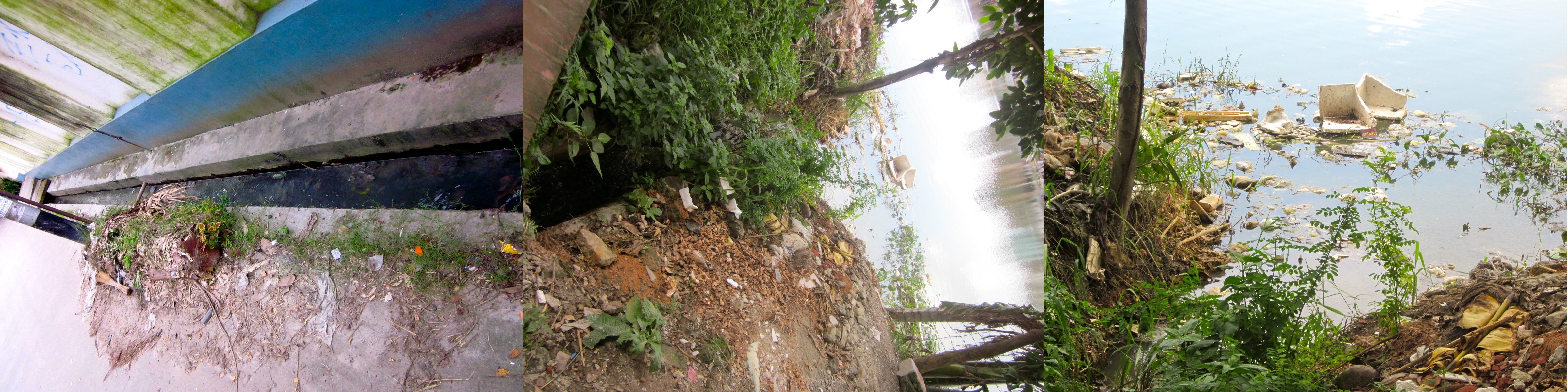
Poor water sanitation and a lack of infrastructure in Dhaka have caused vast amounts of sewage to overrun into the surrounding streams, lakes and rivers. While walking along the water’s edge, one can observe the large trash deposits that pollute the waters and smell the ripe stench of feces that contaminates the air. Even at a glance, it is quite obvious that one of the major inhibitors to the progression of healthcare in Bangladesh is rooted in water quality and sanitation.

In the latest World Water Development Report, the United Nations stated that access to water is not only essential for life and longevity, but also for sustainable development as a whole. Figures estimate that for every $1 invested towards safe drinking water around the globe, there will be a return of $3-$34 dollars, depending on the region and type of investment that is made.  Furthermore, “almost one-tenth of the global disease burden could be prevented by improving water supply, sanitation, hygiene and management of water resources,” which could greatly reduce the numbers of the 1.4 million children dying annually due to preventable diarrhoeal diseases, such as Cholera.

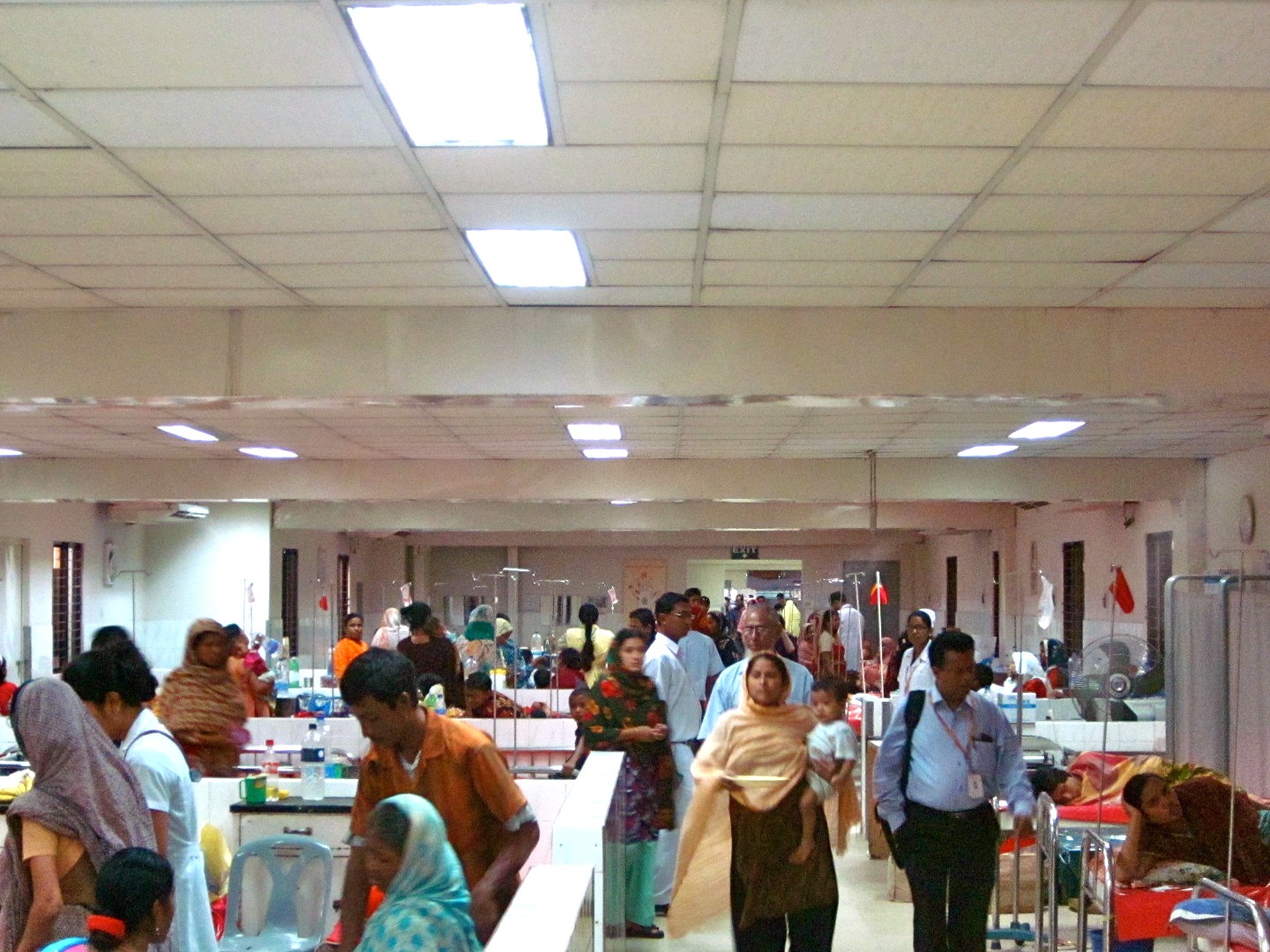
Dr. Bradhan claims that two-thirds of the patients seen in the SSU are child-patients, attesting to the number of children that are being affected by such water-related diseases. This figure translates to a significant amount of cases considering that the number of patients seen at The Centre has risen drastically from the 66 patients a year seen in 1960, to the average of 300 patients treated daily at present. Additionally, with the population of Bangladesh steadily increasing, there are no signs that the high patient count will depreciate.

Taking this into account, the hospital has implemented several strategies in order to more effectively treat the community.All the beds used are simply crafted, yet durable and space-efficient, making them ideally catered for large numbers of people packed into a limited area. Cleaning is also a breeze. Each day of the week has a corresponding bed mat color, which quickly notifies medical personnel if a bed has been freshly made or if it might still be sullied from a previous day or previous patient. Dr. Bradhan comments on the utility of the ‘cholera cots’ in the video clip below:


In the emergency center of the SSU, each bed is readily equipped with four IV bags—two on either side of the bedposts—in an attempt to save as many precious seconds as it is possible when treating the victims of sickness. “We’ve had cases where it has been necessary to insert all four IV’s at once into the patient—one in each limb,” said Dr. Bradhan while recounting instances when patients have been on the verge of death from severe dehydration. “We have to start pumping fluids as quickly as possible; it’s not the Cholera that kills them, it’s the dehydration.” Of course, not all cases are so extreme. For very mild forms of sickness the hospital also offers an area in which individuals can sit while they sip on Oral Rehydration Solutions (ORS) made from rice sugars and water, which have been proven to have greater electrolyte restoration standards compared to traditional glucose solutions. As of now, ORS provide the most effective and least expensive means of treatment, making it a widely accessible and sustainable one.

It is this type of consideration towards the needs of the community, coupled with strong preemptive measures, that has led to the hospital’s wide success in caring for the people of Dhaka, and surrounding areas of Bangladesh. It is also worth noting that the entire hospital runs on a paperless system. Physicians, nurses and staff can be seen making their rounds holding small electronic devices through which they are able to take write up patient charts and take notes. While such technological advancements are not common in other hospitals throughout Bangladesh, it is still an enlightening example of the progression that has been made, and the potential for expansions to come in the future.